Collection

Post Cover

Unreal Engine Bundle 9 June 2026


Info

Title: Unreal Engine Bundle 9 June 2026

Info:

Includes:

Animalia – Blue Wildebeest (pack) UE4.24+.rar
GASP-DynamicAdditiveOverlay-master.rar
Launcher_Animations.rar
MultiObjectsRenamingTool-v3_2-4.27-5.4.rar
NPC Charaters Kids (Pack) UE4.18+.part1.rar
Portal VFX Enhanced UE4.27+.rar
ACBS1057.zip
Cliffs Terrain Pack.zip
Cosmic_Architec_v1.0_5_7.zip
Driveable__Animated_Retro_Cyberpunk_Hover_Car_02.zip
Hyper_AI_Studio_v1.0.0_5_8.zip
POLY_-_Lite_Survival_Forest.zip
Road Generator (OSM to Unreal) v1.5 UE5.7.zip
Side Scroller Pack – Platformer Mechanics.zip
Simple Spline Mesh Level Design Tool – Modular System – Roads Walls Fences v1.0 UE5.7.zip
Spline Path System – Movement Framework.zip
Waterline PRO v6.4.zip
Wooden Sofa Table – Asset Pack.zip

Download

此隐藏内容仅限VIP查看升级VIP

Post Cover

Duration 30h Project Files Included MP4


Info

Title: Pikuma – C++ Game Engine Programming

Info:

Updated to March 2026

This course is a gentle and comprehensive introduction to the fundamentals of 2D game engine architecture. We’ll discuss several of the most popular programming patterns used in game development and try to put all the theory we learn into context by coding a small 2D game engine using modern C++, SDL, and Lua.

We will write, together, a small ECS framework from scratch to manage our entities, components, and systems. We will discuss how engine programmers design their code and how we should think of organizing game objects in memory with performance in mind.

Download

此隐藏内容仅限VIP查看升级VIP

Post Cover

Duration 35h Project Files Included MP4


Info

Title: Pikuma – 2D Game Physics Programming

Info:

This course is a gentle introduction into the world of 2D game physics! We’ll review all the beautiful math that provides the foundation for most physics engines, starting with a strong review of vectors, matrices, basic trigonometry, rigid-body collision, and touching a little bit of calculus as well.
c++ physics engine tutorial

The lectures are designed to teach all concepts from first principles. In our journey, we’ll review several topics from physics, like velocity, acceleration, integration, mass, forces, gravity, drag, friction, rigid body dynamics, collision detection, constraints, etc.

We’ll also put theory into practice by coding a very simple 2D physics engine from scratch using the C++ programming language.

We’ll start by writing a simulation of particle physics, which is a good start for us to address concepts like movement, forces, displacement, and integration.

We’ll then proceed to work with rigid bodies by adding shapes to our objects, like circles, rectangles, and polygons. We’ll also learn how to code the collision detection and collision resolution between these rigid bodies.
physics engine constraints tutorial

We’ll conclude our C++ implementation by adding constraints to our physics engine, which will help us add different types of objects to our engine, like joints and ragdolls. Ultimately, constraints will help us improve the stability of our engine, and they are a great opportunity for us to discuss some interesting ideas from calculus.

Download

此隐藏内容仅限VIP查看升级VIP

Post Cover

Duration 45h MP4


Info

Title: Pikuma – 3D Computer Graphics Programming

Info:

This course is a complete immersion into the fundamentals of computer graphics! You’ll learn how a software 3D engine works under the hood, and use the C programming language to write a complete software rasterizer from scratch; including textures, camera, clipping, and loading complex OBJ files. Pixel per pixel, triangle per triangle, mesh per mesh.
3d programming from scratch

We’ll review all the beautiful math that makes 3D computer graphics possible as we tackle all concepts from first principles. We’ll also write a comprehensive software renderer that can display complex 3D objects on the screen without the help of any graphics API. No GPU, no OpenGL, no DirectX! Just a C compiler and a little bit of linear algebra is all we need to create a final project that is nothing short of amazing!

Download

此隐藏内容仅限VIP查看升级VIP

Post Cover

Duration 7h 40m MP4


Info

Title: Doublejump Academy – Advanced Matte Painting with Steven Cormann

Info:

Standard Edition

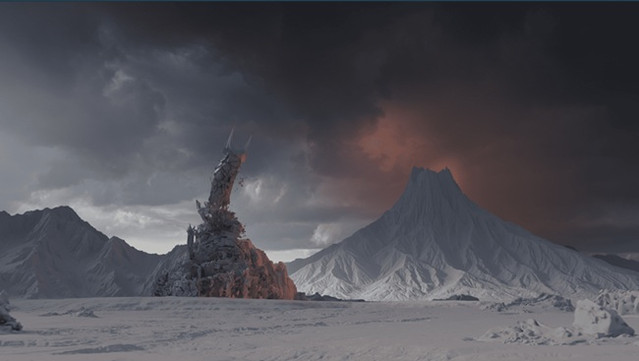
This advanced workshop focuses on the professional techniques required to create high-end matte paintings for film and television. Taught by industry expert Steven Cormann, you will delve into the complexities of perspective, atmosphere, and light to create convincing, cinematic environment designs. You will move beyond simple 2D painting to integrate 3D geometry, advanced projection mapping, and look development.

Course Content
Advanced perspective and camera projection techniques;
Integrating 3D elements into 2D matte paintings;
Mastering atmospheric depth, lighting, and color grading;
Advanced texturing and digital painting workflows for large-scale environments;
Industry-standard pipelines for professional VFX production.

Download

此隐藏内容仅限VIP查看升级VIP

Post Cover

Duration 2h 10m  MP4


Info

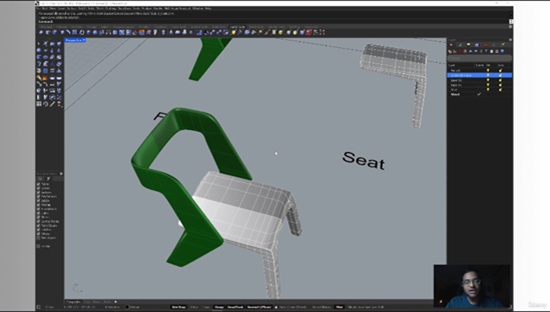
Title: Rhino 3D SubD – Product Design

Info:

What you’ll learn
Understanding SubD Modeling including Basic principles of subdivision surfaces
Interface and Tools like SubD-specific toolbars and commands, Navigation in SubD modeling mode, Customizing interface for SubD workflow
Creating SubD primitives Converting between SubD and other geometry types
Managing subdivision levels Creating and controlling edge creases
Advanced Modeling Techniques such as Face extrusion techniques, Edge loop management, Bridge surface creation, Pattern development
Organic Modeling with Practical examples
Workflow Management
Surface analysis, Model optimization, Error checking, Preparation for manufacturing
complex Modeling
Integration Techniques like Combining SubD with NURBS, Hybrid modeling approaches
Concept development
Practical examples in multiple disciplines and Real-world case studies
Problem solving with multiple issues and preparing the surface
Output and Documentation

Description: Master SubD modeling in Rhino 3D to create innovative, ergonomic, and visually striking product designs. This course is built specifically for industrial designers, product developers, and 3D artists who want to harness SubD’s flexibility to sculpt fluid, organic forms with precision.

Why SubD? Traditional NURBS workflows often struggle with highly organic shapes. SubD bridges that gap, letting you sculpt freeform geometry while maintaining control over detail and manufacturability. It’s the perfect tool for consumer electronics, footwear, furniture, packaging, and lifestyle products where aesthetics and usability must align.

Practical Approach: This course takes you beyond theory into the practical application of SubD modeling for product design. Instead of abstract geometry, you’ll learn through intuitive, step‑by‑step examples that mirror real industry workflows. Whether you’re designing consumer electronics, footwear, furniture, or packaging, you’ll see exactly how SubD adapts to the challenges of modern product development.

Outcomes: By the end of this course, you’ll be able to adapt SubD techniques directly into your product design workflow, confidently moving from concept sketches to fabrication‑ready models. You’ll gain the ability to explore bold, organic forms while ensuring they remain practical for prototyping and production.

Elevate your Rhino 3D skills and unlock new creative possibilities in product design with SubD.

Who this course is for:
This course is for anyone interested in Rhino Sub-D organic modeling
Designers working on prototypes who need smooth, manufacturable surfaces
Digital Artists : Character modelers who want to create organic forms, Artists transitioning from other 3D software like Maya or Blender, Concept artists working on visualization projects
Students & Educators : Design students learning professional 3D modeling tools , Architecture students exploring form-finding techniques, Educational institutions teaching advanced modeling techniques
Manufacturing Professionals : Engineers who need to create complex surfaces for manufacturing, Tooling designers working on molds and casts, Professionals in rapid prototyping and 3D printing
Architects & Interior Designers : Professionals designing organic architectural elements , Those working on unique facades or sculptural building components, Interior designers creating custom furniture or fixtures

Download

此隐藏内容仅限VIP查看升级VIP

Post Cover

Duration 3h 42m MP4


Info

Title: Udemy – 3 Methods for Creating Game Assets in Blender 5

Info:

What you’ll learn
3 ways to create game ready models
Step by step process of creating each model
Sculpt high quality models
Retopology
UV unwrapping
Bake textures from high poly meshes
Properly set up PBR materials
Create LOD’s for your assets
Export assets to game engines

In this course, I’ll show you 3 methods for creating game assets in Blender. Not every model needs the attention to detail like a character model would need. I’ve worked on many projects and over the years have found several ways to create assets using different methods. If you are someone who is developing games with a small team or the honorable solo dev, it’s nice to have a few tools in your bag to get the job done how you see fit. I’ll explain each method in detail and the purpose behind each one.

By the end of the course you’ll learn:

High-poly to low-poly workflow

Low-poly to high-poly workflow

Smart materials

Sculpting

Retopology

Baking textures

LODs

UV Unwrapping

Exporting to game engines

Extra lecture (3D Coat workflow)

And more

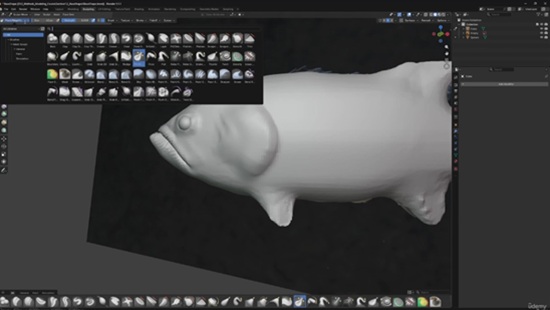
We will be modeling and sculpting a fish to learn the first method. For the second method, we will be creating a base mesh of a barrel and sculpting details afterwards. In the final method we will take on a medieval door without sculpting any details and relying on the PBR materials.

We will be creating 3 models during this course, and I hope to see you in class!

Who this course is for:
Intermediate Blender users that want to create assets for their game. This course is not recommended to brand new users of Blender. I do explain the processes behind what I’m doing, but if you just learning the interface this course may not match your needs.

Download

此隐藏内容仅限VIP查看升级VIP

Post Cover

Duration 7h Project Files Included MP4


Info

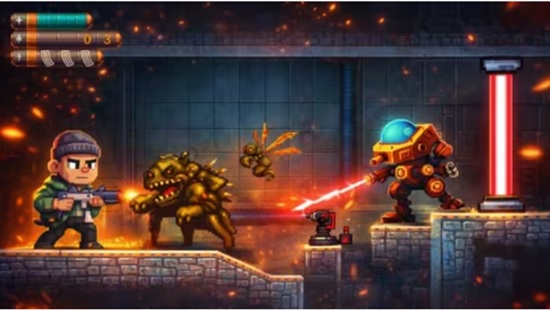
Title: Udemy – Unreal Engine 5: Build a 2D Side Scroller Shooter Game

Info:

Learn Unreal Engine 5 Blueprints, PaperZD animations, enemy AI, weapons, traps, UI systems, pickups, and level design

What you’ll learn
Create a complete 2D side-scrolling shooter game from scratch
Use Unreal Engine 5 Blueprints without writing code
Create TileSets and TileMaps using Paper2D
Configure Unreal Engine for professional 2D development
Create smooth player movement, jumping, crouching, and rotation
Implement weapon shooting and projectile systems
Create reload mechanics and animation notifies
Build ammo counters and HUD interfaces
Design game levels using Paper2D assets
Add sound effects and game feedback
Create health and damage systems
Build enemy AI that follows and attacks the player
Create flying enemies
Design environmental hazards and traps
Create collectible pickup systems
Implement double jump mechanics
Create projectile-based enemy attacks
Build win screens and animated UI
Learn practical Blueprint development workflows
Finish with a complete playable game project

Requirements
A computer capable of running Unreal Engine 5
Desire to learn game development
Unreal Engine 5 (free download)

Description
Welcome to the complete Unreal Engine 5 2D Side Scroller Shooter course!

In this project-based course, you will learn how to create a professional 2D action shooter game from scratch using Unreal Engine 5, Blueprints, Paper2D, and PaperZD.

Instead of learning isolated concepts, you will build an entire playable game step-by-step while learning real game development workflows used by indie developers.

Throughout the course, we will create a complete character controller featuring movement, jumping, crouching, shooting, reloading, animations, health systems, UI, enemy AI, pickups, traps, level design, and much more.

We will also create multiple enemy types including mechanical enemies, flying enemies, alien creatures, and a boss-like worm enemy capable of attacking the player with projectiles.

By the end of the course, you will have developed a complete side-scrolling shooter game that you can expand into your own commercial project.

What makes this course different is the practical approach. Every lesson focuses on building a real game feature that contributes directly to the final project.

Whether you are a complete beginner or an Unreal Engine user looking to learn 2D game development, this course will provide the skills and confidence needed to create your own games.

Join now and start building your own 2D shooter game today!

Who this course is for
Complete beginners interested in game development
Unreal Engine users who want to learn 2D game creation
Artists who want to turn their artwork into playable games
Indie developers building 2D action games
Students wanting practical Blueprint experience
Anyone interested in creating side-scrolling shooter games


Download

此隐藏内容仅限VIP查看升级VIP

Post Cover

Duration 6h 30m Project Files Included MP4


Info

Title: FXPHD – SIL104 – Production Features and Workflows in Silhouette

Info:

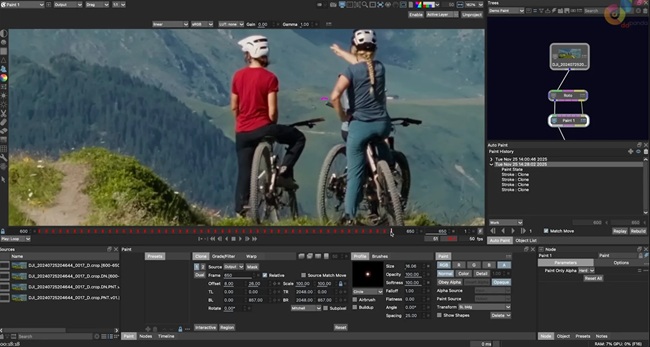
This course is designed for artists who already have some experience with Silhouette and want to build on their existing roto and paint skills. SIL104 focuses on updated production workflows, introducing new Machine Learning tools, 3D workflows, and expanded paint and tracking features, with practical examples drawn from real-world shot work.

Featuring Silhouette software v2025.5, SIL104 consists of 12 classes, 10 16-bit EXR shots, and over 6 hours of instruction and builds on previous courses SIL101 – Introduction to Silhouette and Roto, SIL102 – Introduction to Silhouette and Paint Part 1 and SIL103 – Introduction to Silhouette and Paint Part 2.

SIL104 starts with two classes covering recent paint and roto updates since the previous fxphd Silhouette series, then transitions into new features and workflows. Silhouette is evolving into a robust, multi-faceted, cross-disciplinary application that includes not only roto and paint features but also compositing, updated 2D tracking options, 3D tracking capabilities with integration, and several new Machine Learning nodes. In this course, the ML nodes covered are: Denoise ML, Face ML, Mask ML, Matte Assist ML, Matte Refine ML, and Motion Blur ML.

After the refresher classes, there are two ML roto classes that cover three separate shots, taking one through the myriad options for automatic matte creation and edge treatment. These new tools provide fast previs mattes, comp assist, tracking assist, as well as final composite quality results.

Next up is a four-part Beauty Work shot that encompasses Mocha Powermesh tracking, shape-based warping with Silhouette’s Morph node, Inpatient, Face ML and the newly reimagined Cryptomatte. Following is a two-part tricky plate reconstruction shot with an oversized clean plate and lots of real-time problem-solving.

The course wraps up with two classes and three shots incorporating the new SynthEyes camera solver in the 3D Scene node. Two separate paint workflows are explored, along with how to use 3D data for rotoscoping.

Whether it has been a year or a couple of months since you last worked in Silhouette, this course will bring you right up to speed with the latest. Thanks go to Damien Vergez of Fast Fokus, Ben Brownlee of Boris FX and ActionVFX for providing the footage.

Katie Morris is a Visual Effects Digital Artist with credits on over 87 feature films. She brings deep expertise as a 2D and 3D post-production digital paint artist, paint compositor, and rotoscoper, using a wide range of techniques and software packages to reconstruct background plates and complex sequences. Katie is also a beta tester for Silhouette FX, giving her early, practical insight into new features long before they reach production.

Download

此隐藏内容仅限VIP查看升级VIP